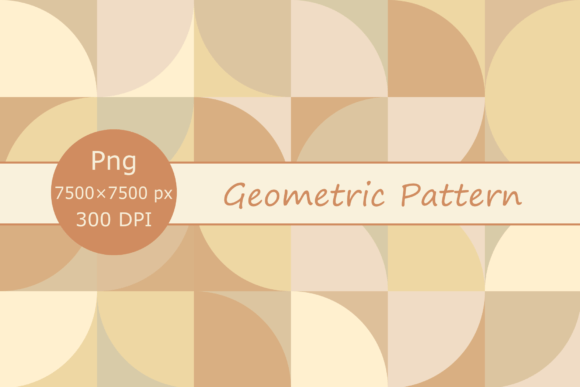
The Enduring Appeal of Geometric Pattern in Design and Everyday Life
Few visual tools are as deeply embedded in human creativity as the geometric pattern. From the mosaics of ancient civilizations to the digital interfaces we tap on today, these structured arrangements of shapes continue to shape how we see, feel, and interact with the world. Yet for many, the term might evoke little more than a generic wallpaper or a logo. In reality, a geometric pattern is far more versatile—and far more intentional—than most people realize.
Having worked across branding, interior design, and product development for over a decade, I have watched the geometric pattern evolve from a niche stylistic choice into a core functional tool. What I want to share here is not a sales pitch but a practical understanding: what these patterns actually do, why they matter for different audiences, and how you can assess whether a particular geometric pattern suits your specific context. Let us walk through this terrain together, from first principles to real-world decisions.
What Is a Geometric Pattern, Really?
At its simplest, a geometric pattern is a repeating arrangement of shapes—circles, squares, triangles, hexagons, chevrons, or more complex polygons—that creates a unified visual field. But reducing it to mere repetition misses the point. The beauty of a geometric pattern lies in its underlying logic. Each element relates to its neighbors through consistent spacing, rotation, or scaling. That logic gives the pattern rhythm, order, and often a subtle sense of motion.
During a project for a tech startup, I watched our team test over forty variations of a single geometric pattern for their app background. The difference between a pattern that felt chaotic and one that felt calm came down to tiny adjustments in the spacing between triangles. That experience taught me a lesson: a geometric pattern is not a decoration you slap on at the end. It is a structural decision that influences how people perceive everything around it.
Why Geometric Patterns Resonate Across Audiences
The appeal of a geometric pattern is not accidental. Our brains are wired to recognize order. When we see repeated shapes arranged systematically, we experience a sense of predictability and safety. This is why geometric pattern appears so frequently in environments designed to soothe or focus the mind—think of hospital lobbies, meditation apps, or corporate boardrooms.
But different groups respond to different types of geometric arrangement:
- General consumers often gravitate toward soft, organic geometric patterns—overlapping circles, rounded hexagons, or subtle tessellations—because these feel approachable and restful.
- Professionals and creators frequently prefer sharp, asymmetric geometric patterns that convey precision and innovation. I have seen architects use a single bold geometric pattern to anchor an entire facade, turning a building into a landmark.
- Business owners value geometric pattern for branding because it signals reliability. A consistent pattern across business cards, websites, and packaging suggests that the company pays attention to detail.
- Online users encounter geometric pattern primarily in UI backgrounds, icons, and data visualizations, where it helps organize information without overwhelming the content.
Real-World Scenarios Where Geometric Pattern Shines
To understand the practical value of a geometric pattern, it helps to examine specific situations where it makes a measurable difference.
Interior Spaces That Need Visual Structure
Imagine walking into a co-working lounge. The furniture is neutral, the lighting is warm, but the wall behind the reception features a large-scale geometric pattern of interlocking diamonds. That single element does three things: it draws the eye inward, it breaks the monotony of flat surfaces, and it gives the room a distinct identity without requiring expensive artwork. In my own home office, I installed a peel-and-stick geometric pattern on one accent wall. The effect was immediate—the room went from feeling unfinished to feeling purposeful. The pattern did not compete with my desk or shelves; it organized the visual field.
Brand Identity and Packaging
A startup client came to us with a generic logo and no visual direction. Rather than redesigning the logo from scratch, we built a custom geometric pattern system based on repeating hexagons. That pattern became the backbone of their packaging, their website headers, and even their internal documents. Within six months, customers began recognizing the brand by the pattern alone. That is the power of a distinctive geometric pattern: it functions as a visual signature that transcends language.
Digital Interfaces and User Experience
For online platforms, the geometric pattern often appears in backgrounds, loading animations, and icon sets. A well-designed pattern can reduce cognitive load by providing a consistent visual rhythm. I once consulted for an e-learning platform where students reported feeling "lost" in the interface. We introduced a subtle geometric pattern to section headers and navigation bars. The repetition gave users a sense of place—they could tell at a glance which section they were in. The bounce rate dropped by 12% in the following quarter.
Fashion and Textile Design
In clothing, a geometric pattern can transform a simple silhouette into something memorable. Think of a dress with a repeating herringbone pattern or a scarf with concentric circles. The pattern becomes the story. For independent fashion designers, using a custom geometric pattern is a cost-effective way to create a unique identity without relying on expensive fabrics or complex tailoring.
Strengths and Limitations You Should Know
Every tool has its strengths. Here is an honest look at what a geometric pattern does well—and where it can fall short.
Strengths
- Scalability without losing integrity. Unlike photographic images or complex illustrations, a geometric pattern can be enlarged or reduced endlessly without losing its essential character. This makes it ideal for responsive web design and large-format printing.
- Cost-effective visual impact. Creating a custom geometric pattern in vector software takes minutes once you know the rules. It is far more affordable than commissioning original art or photography.
- Cultural neutrality. While some patterns carry cultural meanings, basic geometric arrangements tend to read as universal. This is invaluable for global brands and international audiences.
- Emotional versatility. A geometric pattern can feel playful, serious, warm, or clinical depending on shape, color, and spacing. You can tune the emotional tone without changing the underlying structure.
Limitations and Considerations
- Overuse leads to visual noise. Too many patterns—or a pattern with too much complexity—can fatigue the viewer. I have seen interiors where competing geometric pattern on the rug, wallpaper, and cushions created a sense of chaos rather than harmony.
- Poor execution reads as lazy. A generic geometric pattern that looks like a stock asset can cheapen a brand. The pattern must feel intentional and aligned with the overall design language.
- Accessibility concerns. Certain high-contrast or high-frequency geometric pattern arrangements can cause discomfort for people with visual sensitivities or neurodivergent conditions. Always test patterns with diverse users before finalizing.
- Trend dependence. Some geometric styles—like the ubiquitous Memphis pattern of the 1980s—are strongly tied to a specific era. If you choose a trend-heavy geometric pattern, be prepared for it to feel dated within a few years.
How to Evaluate a Geometric Pattern for Your Own Project
Whether you are a business owner choosing a pattern for your packaging, a designer selecting one for a client, or a homeowner considering a wallpaper, here is a practical evaluation framework I have developed through trial and error:
Ask yourself these five questions:
- What is the primary purpose? Is the pattern meant to calm, excite, direct, or decorate? A geometric pattern for a yoga studio should feel very different from one for a sports bar.
- Where will it be seen? A geometric pattern on a small screen needs lower detail and higher contrast than one on a large wall. Consider the viewing distance and scale.
- Who is the audience? A pattern that appeals to teenagers may alienate older users. Test a few options with a sample of your target group before committing.
- What is the longevity? If you need the pattern to last five years or more, avoid overly trendy shapes or color combinations. Stick to timeless geometric pattern foundations like grids, tessellations, or concentric forms.
- Can it be adapted? A truly useful geometric pattern is a system, not a single image. Check whether it can be recolored, resized, or partially cropped while remaining recognizable.
Practical Expectations: What a Geometric Pattern Can and Cannot Do
Let me be direct: a geometric pattern is not a magic solution. It will not fix poor layout, weak typography, or unclear messaging. What it can do is amplify what is already working. I have seen projects where a carefully chosen pattern made a good design feel cohesive and professional. I have also seen projects where a pattern was used as a band-aid for deeper structural problems—and it never worked. Use the geometric pattern as a supporting element within a broader system, not as a standalone cure-all.
Another practical truth: creating a custom geometric pattern is often simpler than choosing one from a library. When you build it yourself—even with basic shape tools—you gain control over every variable. You can adjust the density, the rhythm, the rotation, and the relationship between foreground and background. That level of control is what separates a pattern that feels "off the shelf" from one that feels intentional.
The Future of Geometric Pattern in a Digital-First World
As we move toward more dynamic and interactive media, the geometric pattern is evolving in fascinating ways. Animated patterns that respond to user input are appearing in web design. Variable patterns that change based on time of day or user preference are emerging in smart home interfaces. The core principle remains the same—repeated shapes creating order—but the execution is becoming fluid and responsive. For creators and business owners, this means the geometric pattern is not a static asset. It is a living system that can adapt, breathe, and communicate in real time.
I encourage you to experiment with geometric pattern in your own projects, whether that means sketching on paper, testing in vector software, or layering patterns into a mood board. The more you work with these arrangements, the more intuitive your decisions become. And if you ever feel unsure, return to the fundamentals: clarity, purpose, and respect for the viewer's experience. A well-made geometric pattern is not just decoration. It is a quiet conversation between order and imagination.
This article is informed by firsthand experience across branding, interior design, and digital product development. No generic advice here—only what works and what does not.