How Editable Ebook Template Bundles Support Smarter Content Planning and Better Outcomes
If you have ever stared at a blank document wondering where to begin, or spent hours formatting a lead magnet only to realize it does not align with your brand, you already understand the hidden cost of starting from zero. Editable ebook template bundles offer a structured alternative that respects your time while preserving creative control. But their real value goes far beyond saving a few clicks. When approached thoughtfully, these bundles become strategic tools that shape how you communicate, position your expertise, and scale your content operations without sacrificing quality or consistency.
What Editable Ebook Template Bundles Actually Are
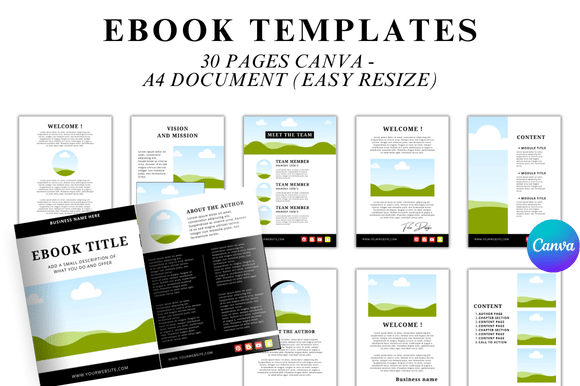
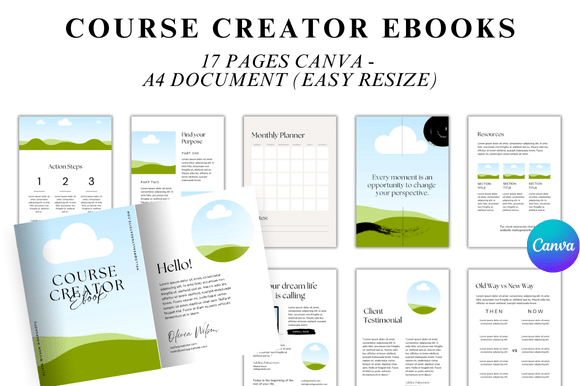
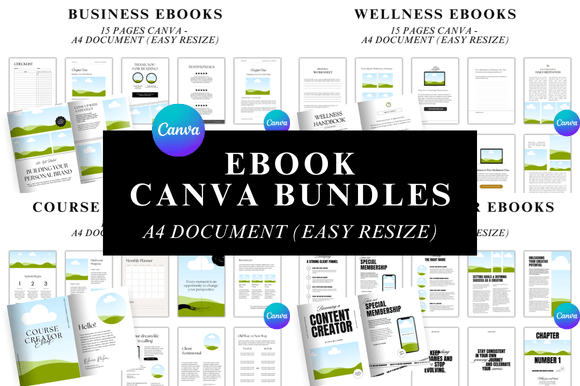
At a practical level, an editable ebook template bundle is a collection of pre-designed document layouts that you can customize with your own text, images, colors, and branding elements. They typically come in formats compatible with common software like Microsoft Word, Google Docs, Canva, Adobe InDesign, or Affinity Publisher. The bundle may include multiple page variations, cover designs, chapter dividers, callout boxes, table of contents layouts, and even reusable style guides.
But describing them only in terms of file types and features misses the point. What makes these bundles strategically useful is the scaffolding they provide. They remove the friction of structural decisions so you can focus on message, argument, and audience. For a busy entrepreneur or a solo content creator, that distinction matters more than most realize.
Why Strategic Use Begins with Goals, Not Templates
The most common mistake people make with editable ebook template bundles is treating them as a shortcut rather than a framework. A template cannot fix unclear objectives or a weak value proposition. It can, however, accelerate your ability to execute once you know what you want to achieve.
Before you open any template file, ask yourself a few foundational questions. What is the primary purpose of this ebook? Are you building an email list, establishing authority in a niche, educating customers about a complex topic, or nurturing existing relationships? The answer determines which template elements you emphasize and which you strip away.
For example, a bundle designed for lead generation might include prominent opt-in prompts and social proof sections. If your goal is internal training or client education, you might prioritize clear navigation, glossary pages, and summary callouts. Choosing a bundle that aligns with your specific outcome makes the difference between a generic document and a purposeful asset.
Supporting Creativity and Productivity Without Overwhelm
One of the underappreciated benefits of working with editable ebook template bundles is the mental overhead they eliminate. When every layout decision is already made, your brain is free to wrestle with ideas rather than margins. This is not a minor convenience. For knowledge workers and professionals who produce content regularly, preserving cognitive energy for higher-order tasks is a real productivity gain.
At the same time, templates do not have to stifle creativity. The best bundles offer enough modularity that you can rearrange sections, swap out visual treatments, and inject your own voice. The constraint of a grid or a color palette can actually spark better design decisions because you are working within a coherent system rather than guessing what looks right from scratch.
Consider a consultant who publishes a short ebook every quarter to share industry insights. Using the same template bundle across editions creates a recognizable visual language. Readers begin to associate the layout with the quality of the content. That is branding in its most practical form, built through consistent execution rather than expensive design work.
Planning and Positioning Through Structured Content
Many professionals underestimate how much planning a template bundle can enforce. When you open a well-designed template, you are guided by its implicit structure. A table of contents page reminds you to map chapters before you write. A callout box encourages you to highlight key statistics or quotes. A conclusion section prompts you to summarize action points.
This structural guidance can improve how you plan your ebook from the start. Instead of writing freely and then retrofitting a layout, you work within a container that supports clear communication. For educators and trainers, this is especially valuable. A template that includes learning objectives, exercises, and summary sections helps ensure your content actually teaches something rather than just presenting information.
From a positioning standpoint, the polish of a well-formatted ebook signals professionalism and care. In competitive markets where buyers judge credibility quickly, a visually cohesive asset can tip the balance in your favor. Editable ebook template bundles make that level of polish achievable even if you have no design background.
When to Use a Template Bundle and When to Build from Scratch
Knowing when to rely on a template bundle is just as important as knowing how to customize one. The decision often comes down to the nature of the content and the stakes involved.
If you are producing a high-volume sequence of lead magnets, short guides, or client onboarding materials, a template bundle is almost always the right call. Consistency across these assets builds trust and reduces production time per piece. On the other hand, if you are working on a flagship book, a detailed annual report, or a highly visual publication where every page needs to feel unique, you may want to use a template as a starting point but deviate significantly from its defaults.
There is also a middle ground. Many experienced content creators keep a library of template bundles for different use cases. A simple bundle for quick downloads, a more elaborate one for premium content, and a minimalist option for internal documents. This approach gives you flexibility without forcing you to reinvent the wheel each time.
Practical Examples of Intentional Use
Let us look at a few realistic scenarios where editable ebook template bundles serve specific goals.
A small business owner in the financial services space wants to build trust with prospective clients. They choose a template bundle with a clean, conservative design and use it to create a short ebook explaining common investment myths. The template's structure forces them to include a credentials page, a disclaimer, and a clear next-step call to action. The result is a professional asset that positions them as knowledgeable without requiring a graphic designer.
A freelance marketing strategist uses a template bundle to create client proposals that read more like mini ebooks than traditional pitch decks. By using a narrative layout with case studies, process diagrams, and testimonials, they differentiate themselves from competitors who rely on slide decks. The template's modularity lets them swap out examples for each client without redesigning the entire document.
A nonprofit organization uses a template bundle to produce educational materials for community workshops. The bundle includes easy-to-read typography and space for translated text. Staff members with varying design skills can produce consistent materials across multiple languages and locations, improving both efficiency and brand coherence.
These examples illustrate a common thread: the template bundle serves the strategy, not the other way around. Each user started with a clear goal and selected a bundle that supported that goal.
What to Consider Before Committing to a Bundle
Despite their advantages, editable ebook template bundles are not a universal solution. Before investing time and money, evaluate a few factors that affect long-term satisfaction.
First, assess compatibility with your tools and workflow. A bundle designed for Adobe InDesign offers tremendous flexibility but requires software skills and licensing. A Canva or Word-based bundle is more accessible but may have limits on customization. Choose the format that matches your team's actual capabilities, not the one that looks most impressive in screenshots.
Second, examine the quality of the template structure itself. Is the hierarchy clear? Are heading styles consistent? Are there unnecessary decorative elements that will clutter your content? A good template should enhance readability, not compete with your message. If the design overwhelms the text, it is working against you.
Third, consider scalability. If you plan to produce multiple ebooks over time, look for a bundle that includes variations in layout and length. Having the same exact structure for every publication can feel repetitive to your audience. A bundle with multiple interior page templates gives you room to keep things fresh within a consistent brand framework.
Risks of Using Templates Without Clear Context
The most significant risk of using editable ebook template bundles without clear goals is that your content becomes generic. When the template drives the message rather than the other way around, readers sense it. They may find the document visually pleasant but forgettable. In a world where attention is scarce, forgettable content fails regardless of how polished it looks.
Another risk is misalignment between the template's tone and your audience. A playful, illustrated template might charm a lifestyle audience but undermine credibility in a legal or medical context. Always test your customized version with a few trusted readers before distributing it widely. Small mismatches in tone or format can create subtle trust gaps that compound over time.
There is also the operational risk of relying on a single bundle for too long. If your brand evolves or your content strategy shifts, yesterday's perfect template can become a constraint. Review your template choices periodically to ensure they still serve your current goals.
How to Use Editable Ebook Template Bundles Intentionally
Intentional use starts with knowing what you want the ebook to accomplish and who will read it. Once those fundamentals are clear, you can treat the template as a tool for execution rather than a source of inspiration.
Develop a short checklist before you begin customizing. Confirm that the template matches your brand colors and typography. Remove any placeholder elements that do not serve your content. Adjust the information hierarchy to guide readers toward your most important points. Test the file in the format your audience will use, whether that is PDF, EPUB, or a printed document.
Also, build a small library of reusable assets that you can drop into any template bundle. Your logo files, brand fonts, approved color palette, and common icon sets. This reduces the time it takes to customize each new template and ensures consistency across your entire content catalog.
If you work with a team, establish naming conventions and file storage practices early. A shared folder with clearly labeled template versions prevents confusion and wasted effort. Document any adjustments you make so that future iterations benefit from past decisions.
Long-Term Value Beyond the Individual Project
The strategic value of editable ebook template bundles compounds over time. Each ebook you produce using a consistent template reinforces your brand identity. Each hour saved on formatting is an hour you can invest in research, writing, or audience engagement. Each professionally designed asset builds a library of resources that continues to generate leads and educate clients long after it is published.
For professionals and organizations that produce content regularly, the decision to use template bundles is not about cutting corners. It is about reallocating effort toward what truly moves the needle: clarity of thought, depth of insight, and connection with readers. The template handles the scaffolding so you can focus on the substance.
When you choose a bundle that fits your goals, customize it with intention, and apply it consistently across projects, you create a content system that works for you rather than a series of one-off design tasks. That shift from reactively formatting each document to proactively building within a structured framework is what separates content that merely exists from content that performs.
Editable ebook template bundles, in the end, are not about templates at all. They are about giving yourself permission to focus on the work that only you can do, while letting well-designed structure handle the rest.